

Written by Jaclyn Rink, MSCP, LLP
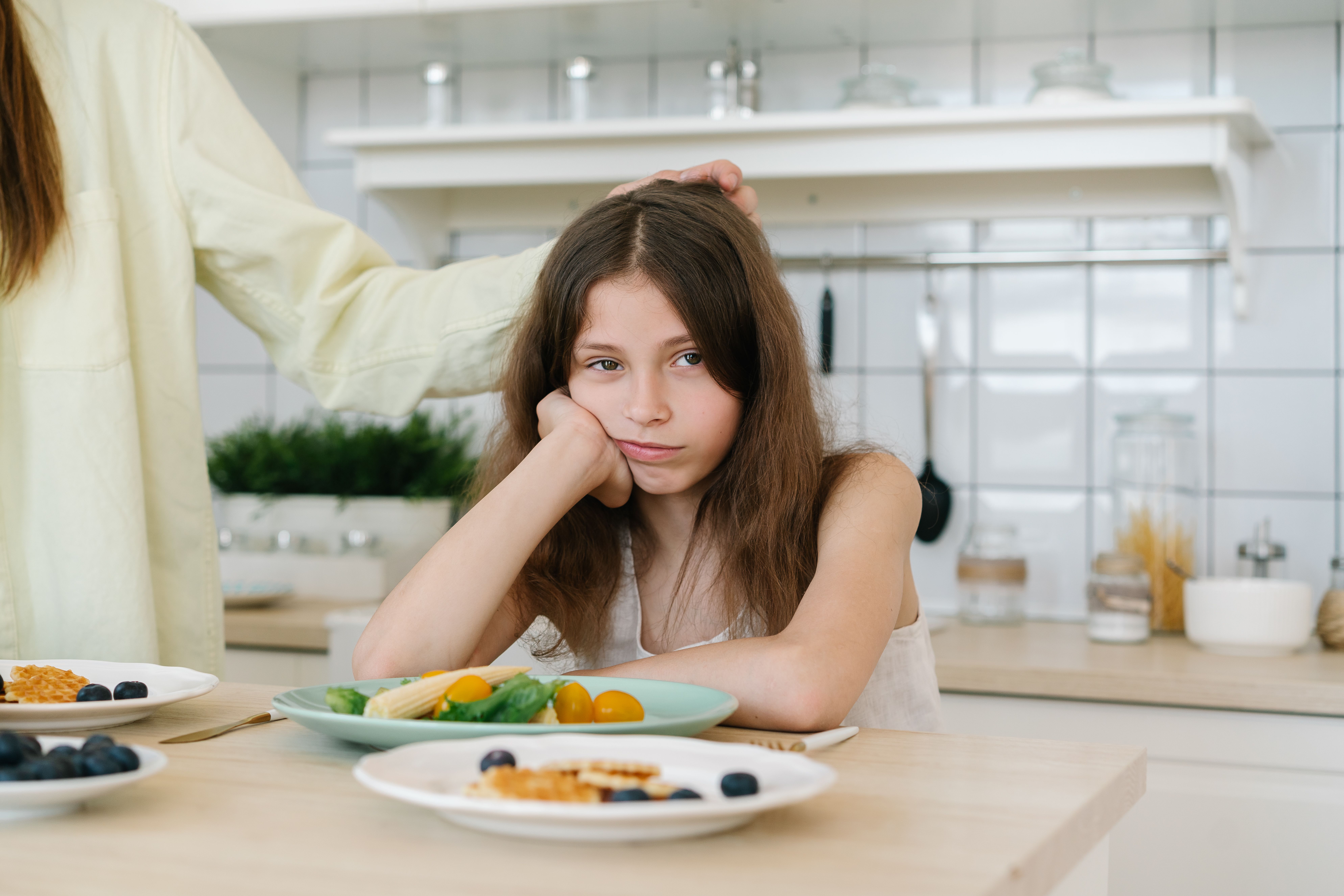
If you are a parent or caregiver who is dealing with a picky eater at home, we know the resistance you feel when you attempt to expand your child’s food catalogue. Food is high on the list of things that parents and children fight about. Whether your child’s pickiness is developmentally appropriate, or they are struggling with something more serious such as ARFID or nutritional deficiencies, here are a few ways to help support them.
- Stop plating their food for them: It may seem counterintuitive, but allowing your child to plate their own food can offer them a sense of control during mealtimes. For children who are already struggling with selective eating, the simple act of sitting down to dinner can significantly increase their stress levels. Food sets off their internal alarm system. Stress activates our amygdala, turning on our fight or flight response, which encourages conservation of basic bodily energy. Therefore, when stress increases, we have less blood flow to the stomach and consequently, less hunger. As cortisol increases, we tend to reach for “comfort foods” (a.k.a. quick sugar/energy boost), making it challenging to make balanced food choices in the moment. This strategy also increases a child’s awareness of their personal hunger and fullness cues instead of parents determining or assuming these levels by providing them with a pre-portioned plate. If eating is already a chore for your child, allowing them the freedom to build their plate may offer a more peaceful and enjoyable experience, and may eventually lead to them grabbing a veggie without your prompting.
- Remember Weber’s Law: Picky eaters usually struggle to try even different brands or versions of the same foods they already like. Weber’s law suggests that the more times we try a food, the less we notice when it slightly changes (e.g., a relatively small change in ingredients isn’t easily detectable). For example, if your child eats 3 types of chicken nuggets, Weber’s law suggests that the 4th and 5th time they try a different chicken nugget, there will be a minimal difference in how it tastes. Weber’s law also encourages us to try the same food many times before deciding if we like it or not. So just because your child tried it once and didn’t like it, don’t completely give up on it. It can be helpful to educate picky eaters that taste and preferences can change over time: “You didn’t like the chicken today, but maybe you will like it next time we have it.”
- Make it Fun: Reducing stress around food is one of the key components to supporting picky eaters. If we can make eating and trying new foods fun, most children are more willing to participate. These suggestions should only be implemented with the cooperation/willingness of the child and considerable parental effort.
Here are a few ideas on how to make food more playful via implicit exposures:
- Guessing Game: Put a few mystery foods into separate paper bags, close them up, and have a family competition trying to guess what’s in the bag based on its size, shape, and feel.
- Create a Food Tree: Draw out a big tree with some empty leaves (on a white board, using construction paper, etc.) Every time your child samples and reports they like a new food, add a leaf to the tree to celebrate their win and watch their food catalogue grow over time!
- Master Chef: Involve them in the food prep! Which step seems the most fun to them…. Cracking the eggs? Flipping the steaks? Putting together the salad? This encourages a sense of independence/control over what’s being served and allows indirect exposure to other foods they may not love while being in the kitchen.
- Food Art: Do you ever remember getting pancakes topped with whip cream in the shape of a smiley face? Whether you create it together or decide to surprise them, food art can be fun, silly, and distracting to the child who is stressed during mealtimes.
- Blind Taste Testing: Put three difference brands of the same food in front of your child, blindfold them, and try to have them guess which one is their normal brand. This one can sometimes be challenging, so I often encourage a parent to go first and will offer a reward if the child correctly identifies their everyday brand.
- Jelly vs. Reality: Most any food now-a-days you can find in a jelly or candy version (e.g., hot dogs, hamburgers, pizza, pickles). This can be a fun group game where participants try a “jelly” version of the food, then the “real” version of the food, and decide which one they like better. Or you could turn this into a competition where there is one real and one jelly impersonator of the same food to try. For example: Whomever rolls a total of 6 points with a pair of dice gets the jelly/candy version, and whoever rolls a total of 4 points gets the real version.
- Grocery Sleuth: Send your grocery sleuth on a hunt for different items that expand their food knowledge.
– “I need you to go get some bananas, and then I want you to discover two other types of fruits.”
– “How many different colors do you see in the produce section?”
– “Can you track down a purple vegetable?”
– “How many different brands of canned beans do you see?’
– “Go grab the popcorn that you want and then tell me the name of one other popcorn brand that you saw.”
**based on SPACE, ARFID Training: Eli Lebowitz, 2024

Leave a Reply